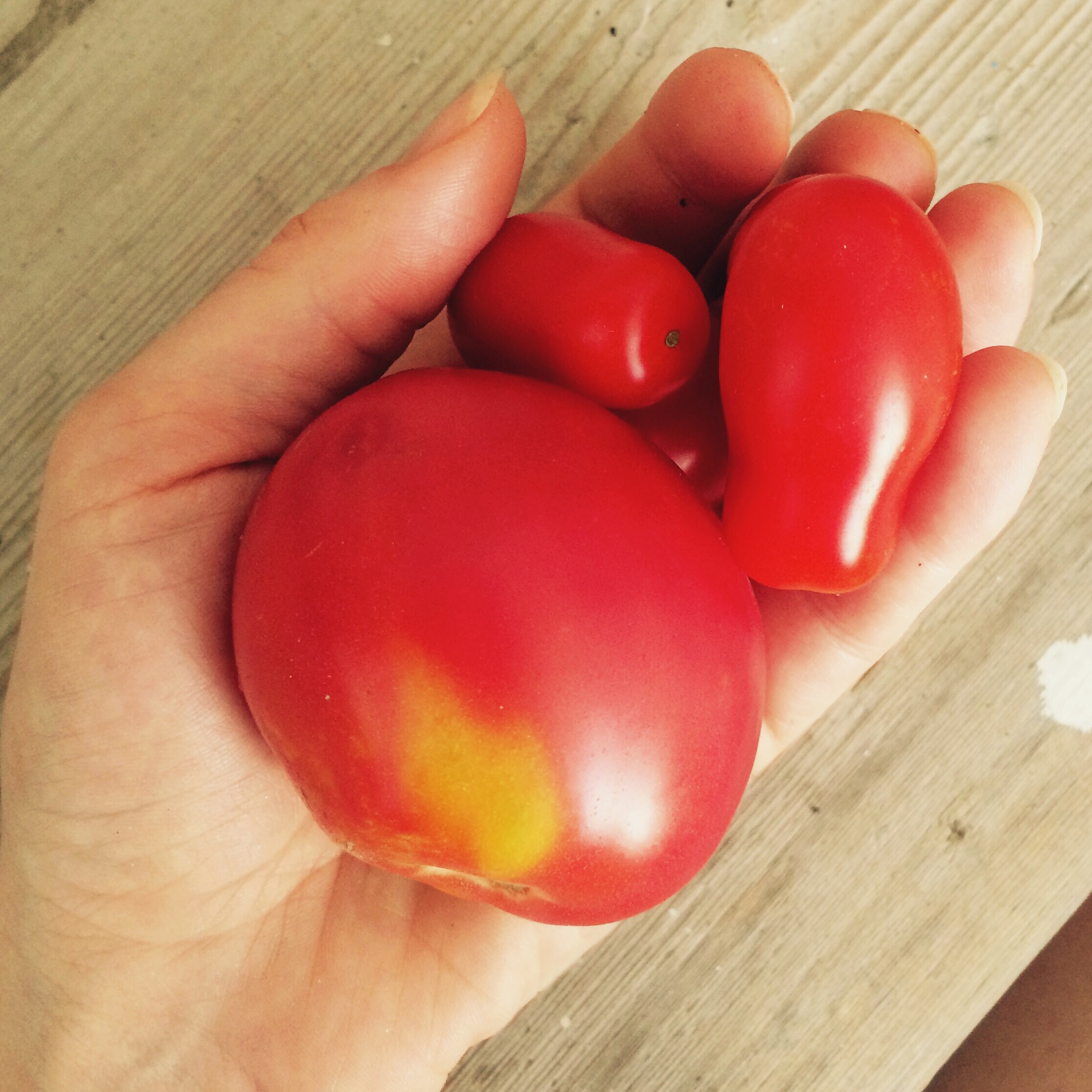
Suitcases down and settled in, I walk the 10 paces across the street to the grocery store, to grab a few things for the house. My eyes light up, as I see home grown tomatoes, all different shapes and sizes, crimson red and a little mottled at the tip… a far cry from the uniform, blemish free specimens in the supermarkets back home.
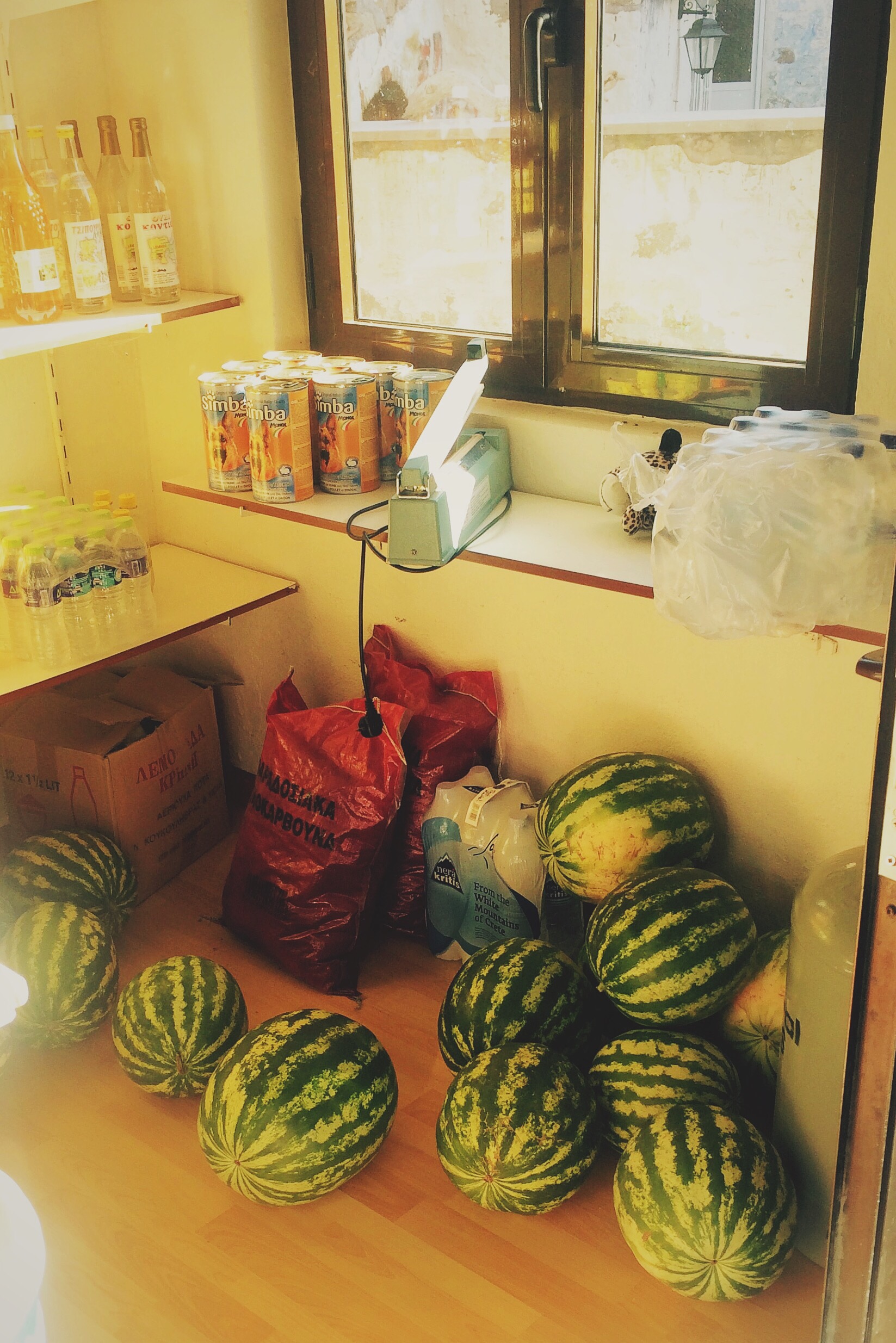
My eyes dart over to the green beans. As thin, crisp and tender as French fries – I can’t help but pick up a handful. Apart from some zucchini, cucumber and a shop floor full of watermelons, there’s not a lot more today. That’s the way it is here. The shelves are sparse, but it’s enough. The food that they sell is grown on the family’s farm or made themselves, so what they have is what they have. That’s it.

Chris asks for a wheel of his favourite cheese handmade by Aspasia, the yiayia of the shop. It’s called Kalathaki a local specialty of Limnos. This rindless, semi-hard sheep’s milk cheese is Chris’s go to snack, paired with watermelon, so we scoop one of those up and haul it home.
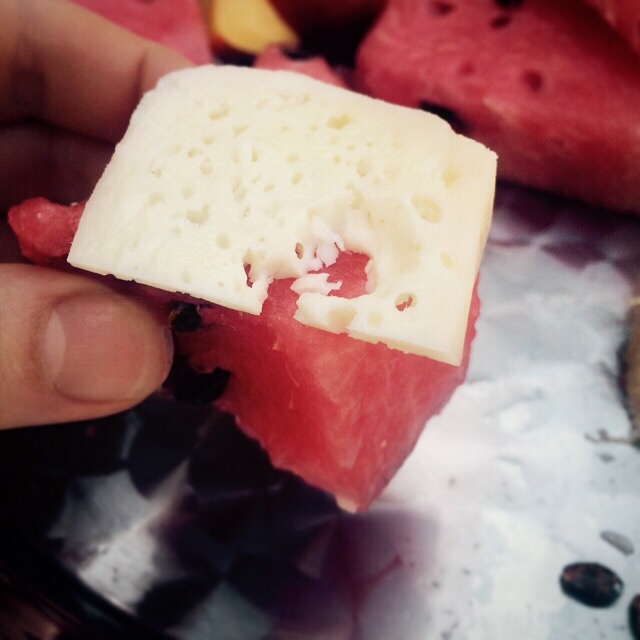
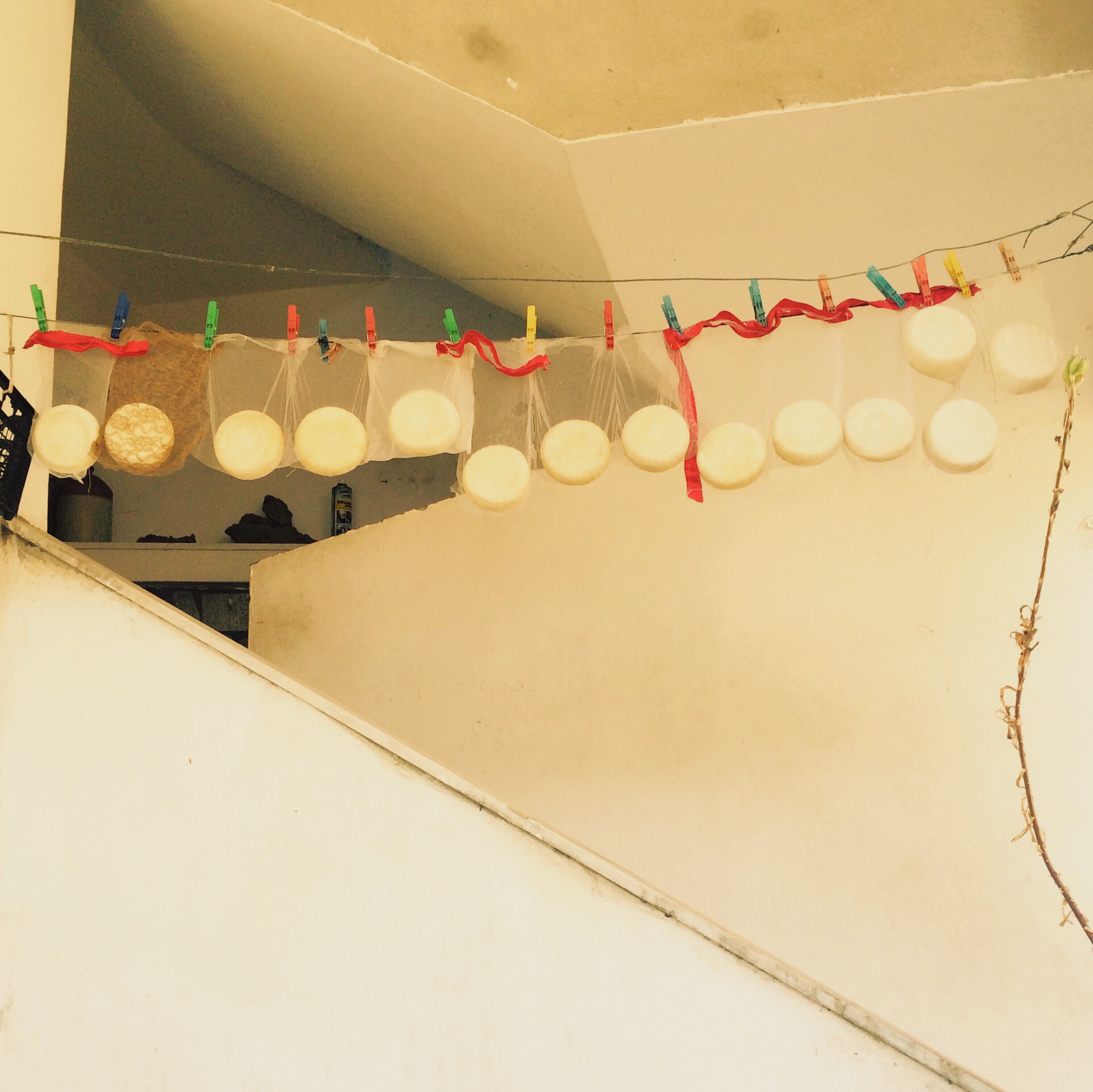
What is it that makes this such a good match? The floral slightly fruity notes in the sheep’s milk seem to just sing with the watermelon. But aside from all that, the watermelon is a refreshingly good alternative to bread in this heat. As we sit and eat, I can see freshly made cheese hanging from the balcony across the road, drying in the sun, right next to half a dozen bunches of wild oregano from the mountains. I wander across the road I ask Aspasia if I can watch her make cheese in the morning..
Overslept as usual, I bound across the road and arrive just in time to see the curd being scooped. It’s a pretty simple operation. She has a blue bucket full of curd that has been cut into cubes and looks a bit like tofu right now.
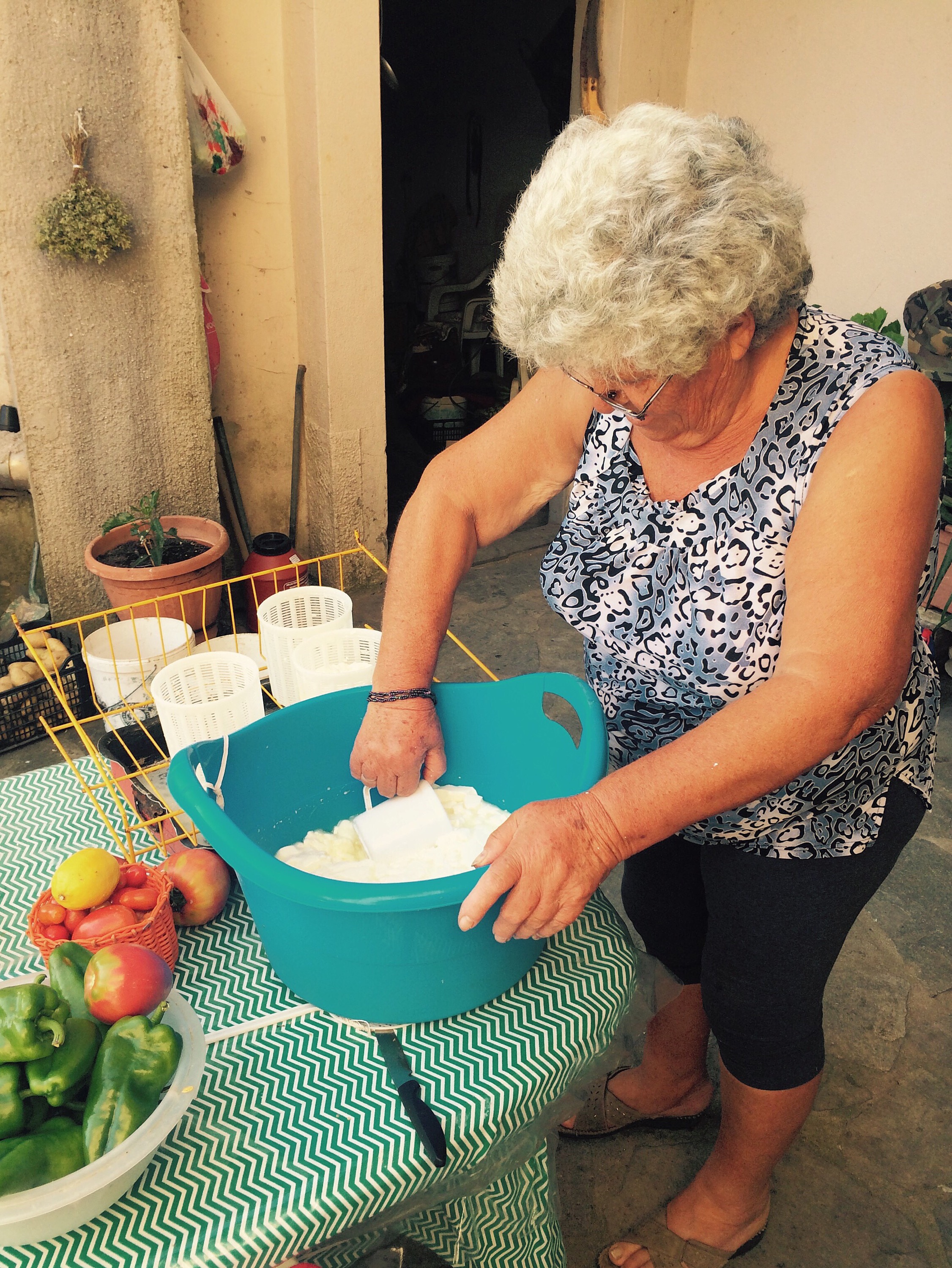
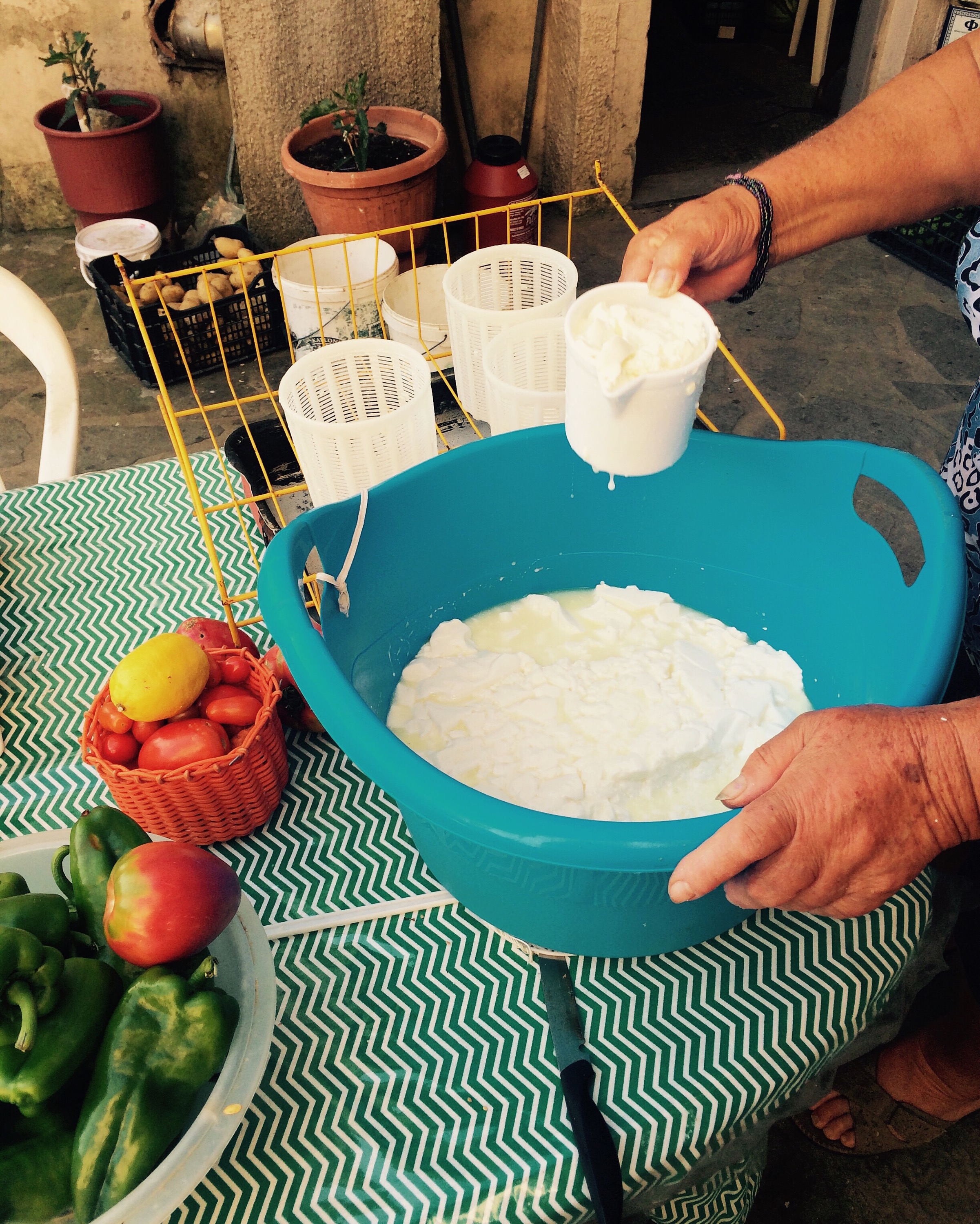
She starts scooping the curd into three tall white baskets, filling them right to the top– she pushes down on the curds with the back of her hand, expelling the whey.
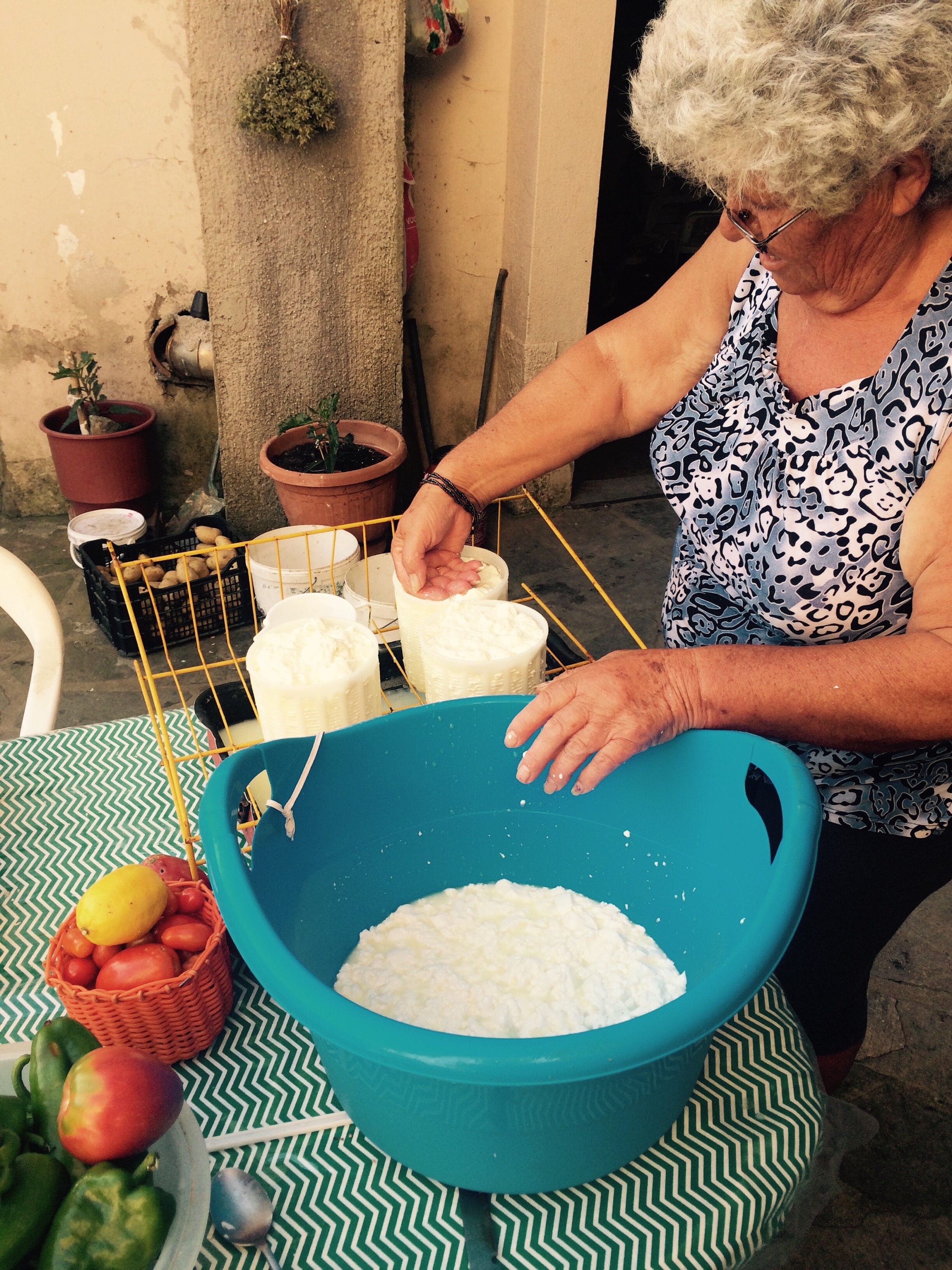
After a few minutes she slops them all back into the blue tub and repeats the process. By then end of the day, these will have reduced in size by half, then it will be time to salt them.
It’s a different process than I’m used to, when I’ve been taught to make cheese before it has been a rather technical process… measuring of pH, starter cultures and the rest of it.
But Aspasia doesn’t follow all that…instead it seems she follows her instinct that way she’s been doing it forever and a day. She’s just making three cheeses today. I ask her why? She explains that last month she was making six, but the milk from her sheep has almost finished up, so just a few now. Right… seasonal variation.. I’d almost forgotten all about that. This really is paddock to plate.
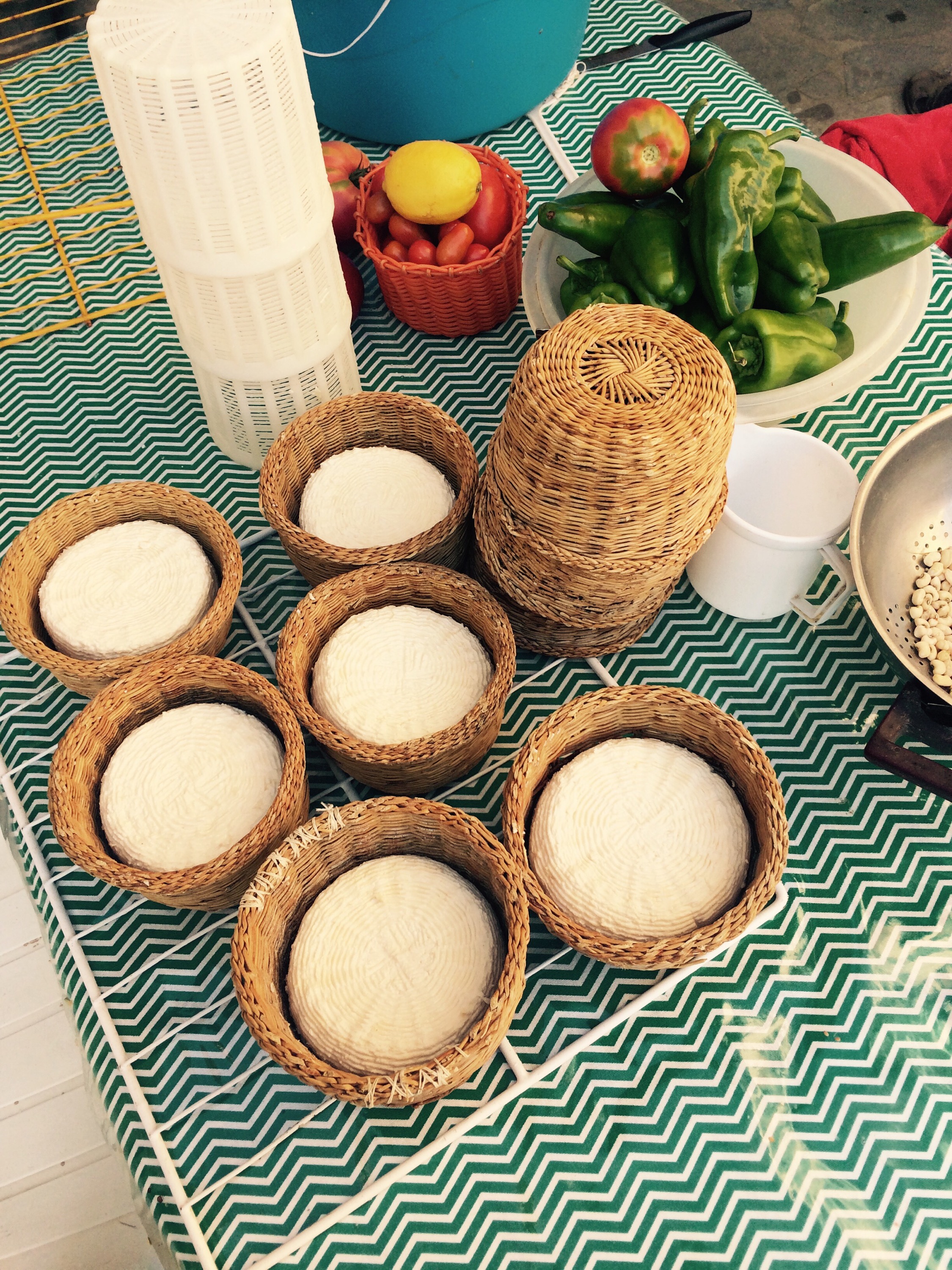
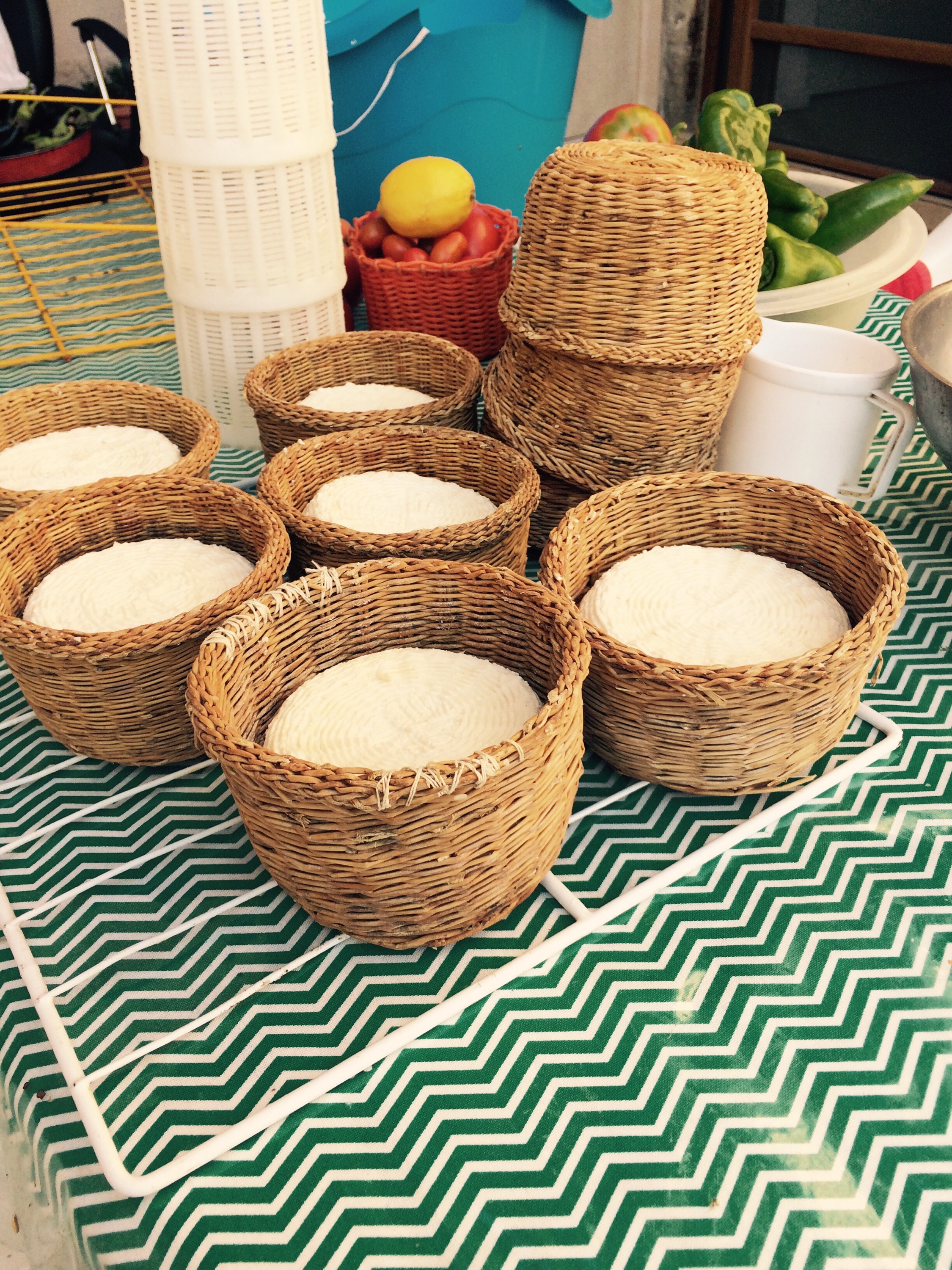
Next to the tub of curd are a bunch of little wicker baskets which hold cheese from the last couple of days. As she turns them out, you can see the imprint of the wicker in the surface of the cheese. These marks are distinctive of Kalathaki you see all over Limnos. She calls over her husband who hangs them out to dry next to the rest of the bounty. Aparently some people wash them in the sea, to salt them as part of the ripening process. So very organic!
Before saying goodbye, I take the opportunity to ask her about another contraption I see on her table, it looks like a long paddle with a plastic grid at the end.. some sort of milk stirrer perhaps? She squeals with laughter, picks it up and swats down a fly on the nearby chair. Ah… that’s what it’s for. I still think it would make a good stirrer.

 ediblepress